Inspection innovations used during road transport inspections
Published date:
Joint inspections in 13 Member States in November 2025 resulted in over 172 000 euros in fines.
News
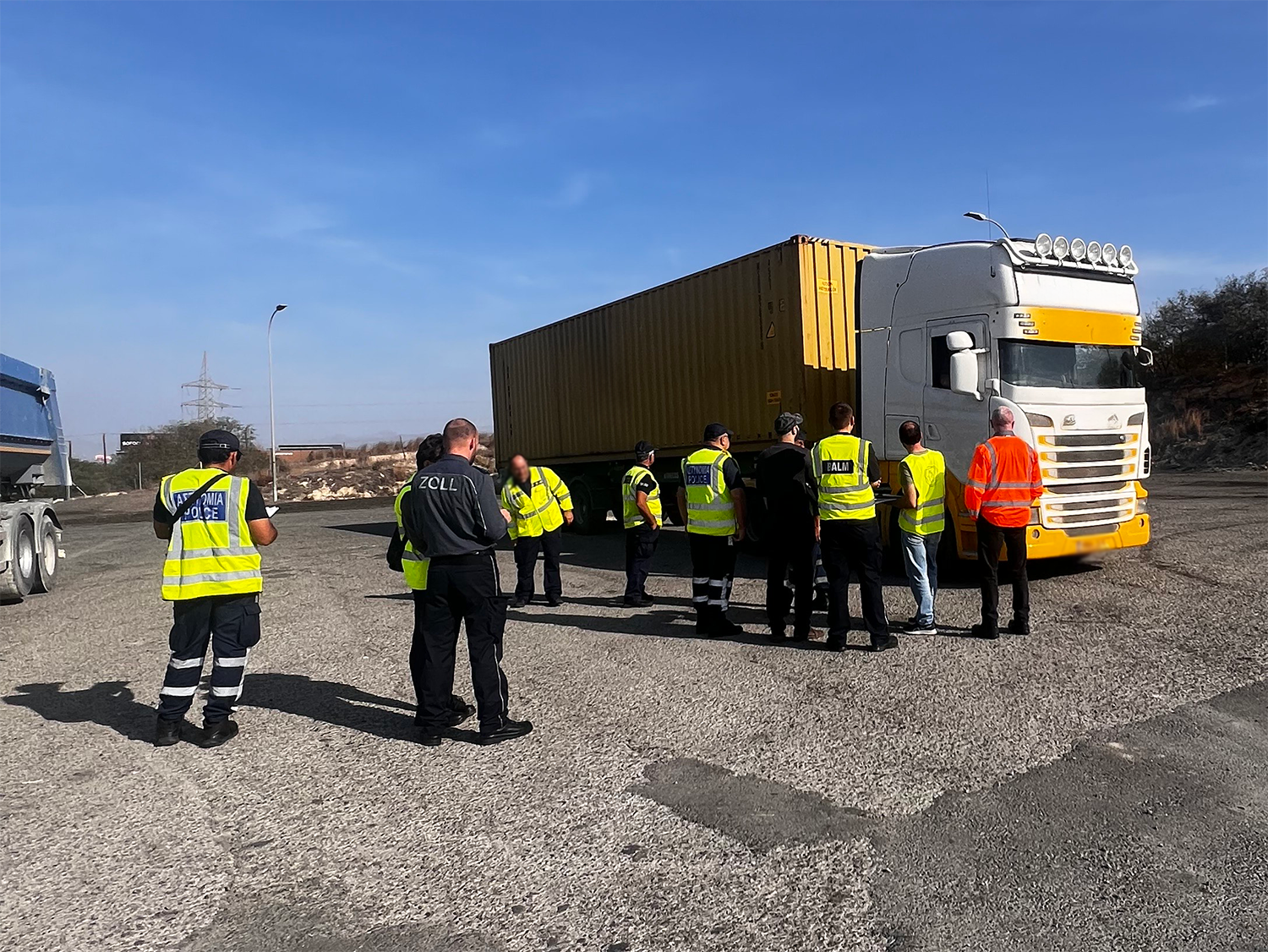
The European Labour Authority coordinated a week of joint inspections held in Austria, Belgium, Bulgaria, Cyprus, Germany, Greece, Hungary, Italy, Lithuania, the Netherlands, Poland, Slovakia and Slovenia.
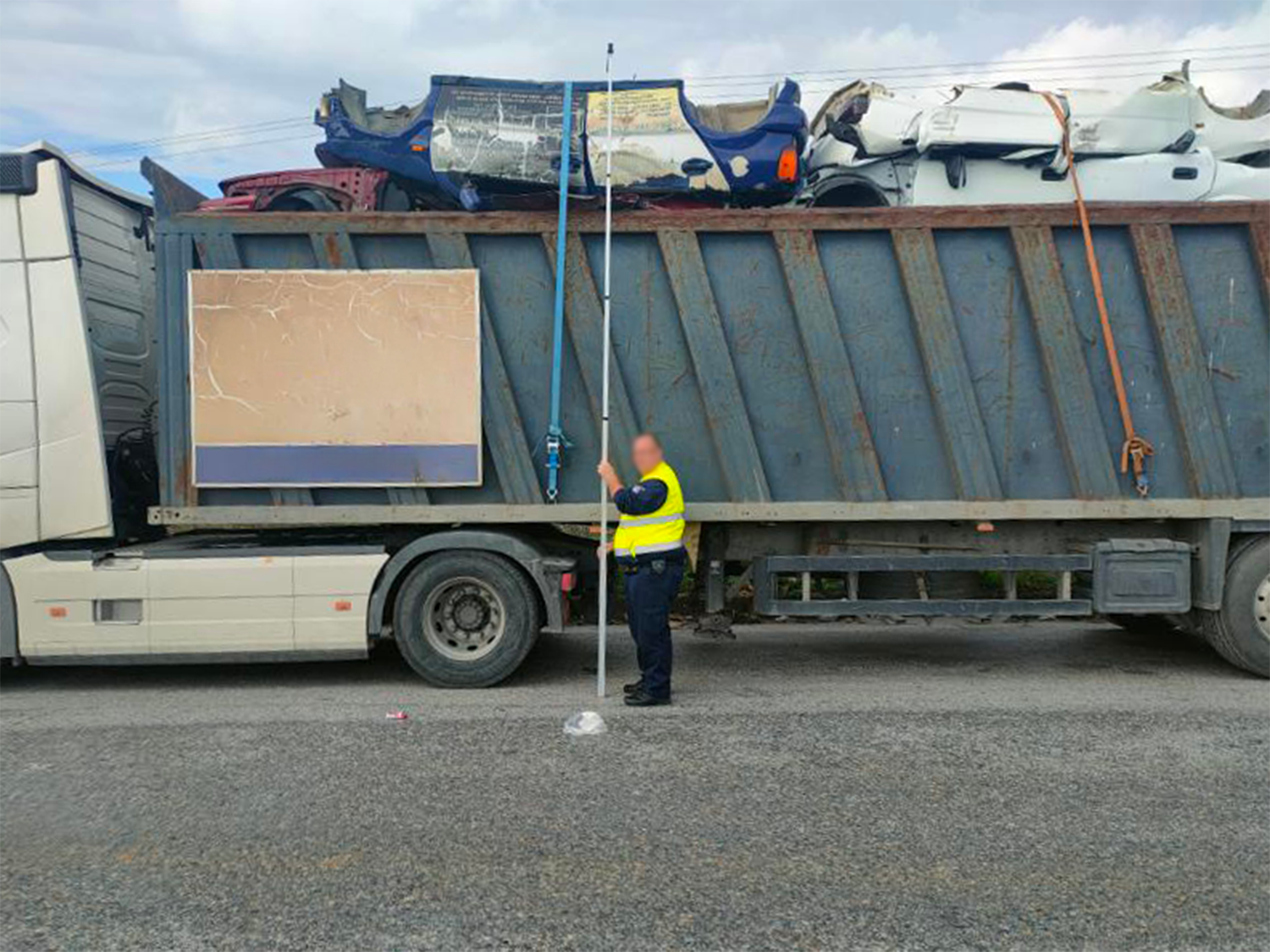
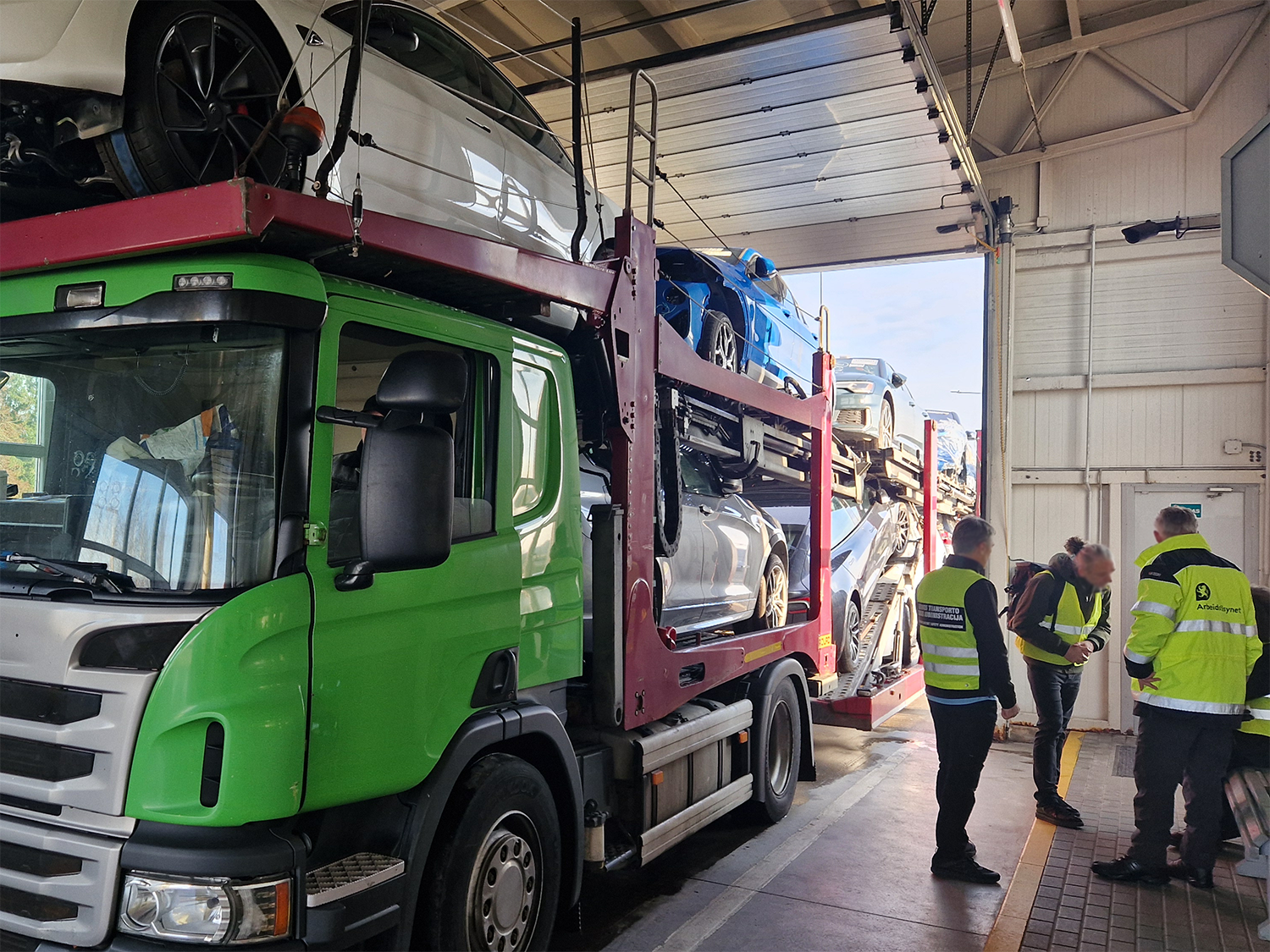
Enforcement authorities participating in the November Road Transport Week of Action used innovative inspection methods.
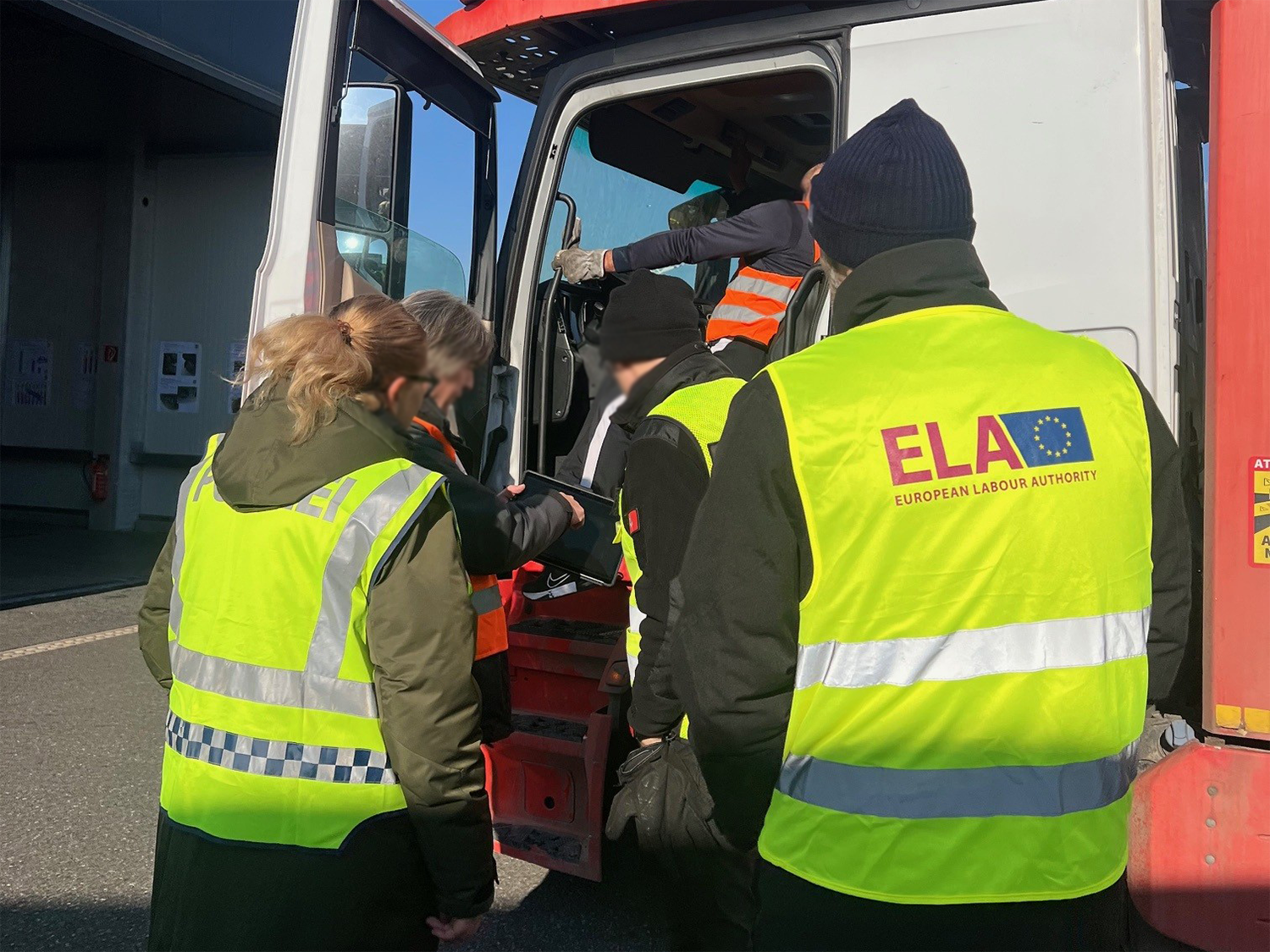
During certain inspections, road transport, labour, and other inspectors systematically examined only the trucks registered in Member States whose enforcement authorities were present at the roadside checks. Inspectors used immediate access to various national databases to help to identify serious violations.
Inspectors used remote early detection communication readers (REDCR) to efficiently preselect vehicles with second-generation smart tachographs for thorough checks.
As part of ongoing investigations started before this Week of Action, multiple Member States coordinated both roadside and premises inspections. The premises checks were conducted simultaneously.
Infringements related mostly to driving and resting time, tachograph offences (tachograph manipulation, driving without a driver card, tachograph calibration, etc.), missing posting declarations and other documents (e.g. a community licenses), undeclared work, illegal employment or potential underpayment of wages. The uncovered infringements of road transport regulations resulted in total fines of more than EUR 172,000. Some cases will be further investigated.
The ELA week of action in road transport in numbers:
Inspections were conducted in Poland at the Świnoujście port as well as on a highway located south of Szczecin. Danish, Swedish and Lithuanian inspectors joined Polish colleagues at checkpoints located at a strategic northern and south-eastern freight transport route. Weronika Stępień, the chief regional inspector of the West-Pomeranian Road Transport Inspectorate, reported:
“The findings from the two-day inspections indicate that, as a result of consistent enforcement efforts, most transport operators are now complying with social legislation in road transport. Drivers have generally expressed support for time limitations. However, monitoring compliance with the requirement for a regular weekly rest period exceeding 45 hours, to be taken outside the vehicle cabin, remains challenging.”
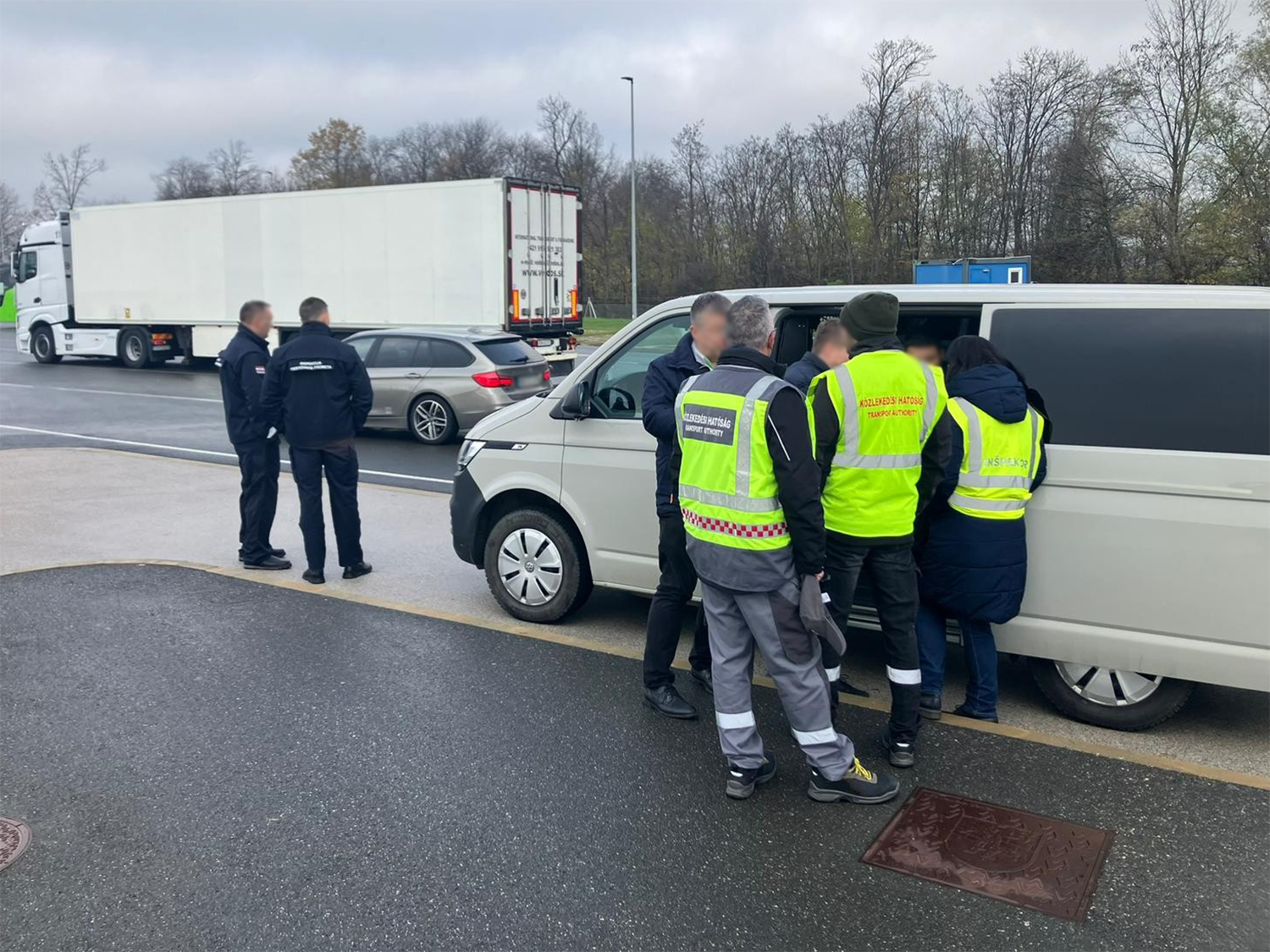
Road transport inspectors from Slovenia conducted a roadside inspection in the north-eastern region of the country; they were accompanied by their counterparts from Croatia and Hungary. The inspectors used remote early detection communication readers during the inspection:
“This technology makes it much easier to quickly spot possible issues. One of the drivers selected for inspection was found to have exceeded the daily driving limit. He was then prohibited from driving further. His license was temporarily seized, and he was ordered to take a reduced daily rest period.”
During an inspection in Germany, BALM found a major tachograph violation along with other serious technical deficiencies on one vehicle:
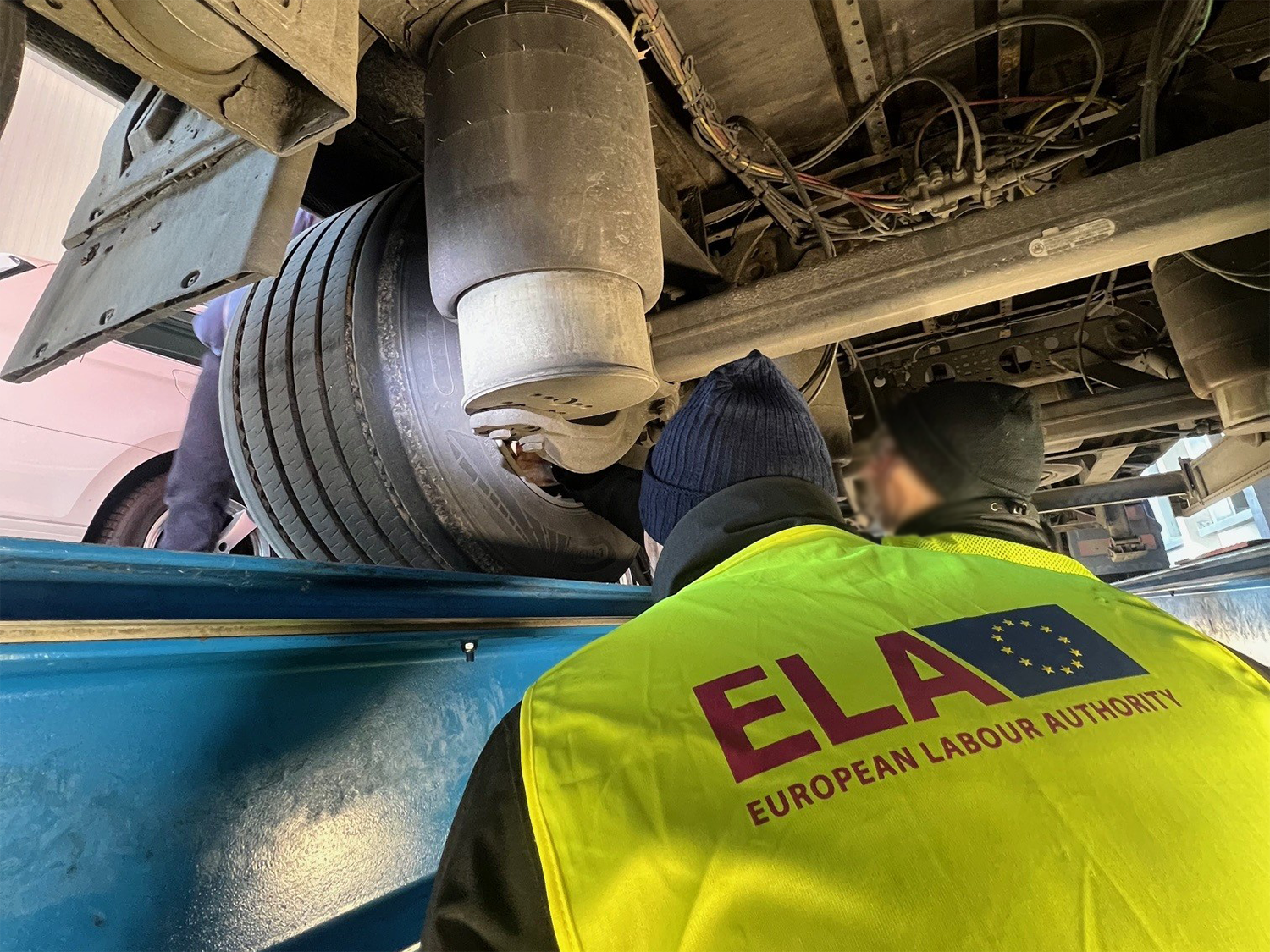
“Particularly noteworthy was the discovery of a complex technical manipulation device on a tachograph, which was uncovered by the technical experts. The use of the vehicle was prohibited until it was brought back into full legal compliance. Furthermore, its operation was banned until a security deposit equal to the expected fine of €30,000 was provided.”
ELA will continue to support and coordinate joint road transport inspections, with the aim of strengthening efforts to promote fair working conditions and road safety in this highly transnational economic sector.
[1] There could be one to more infringements related to a particular vehicle; data provided by 8 Member States.
[2] Number of “clean” checks provided by 7 Member States; the methodology of “clean” checks may differ among Member States.