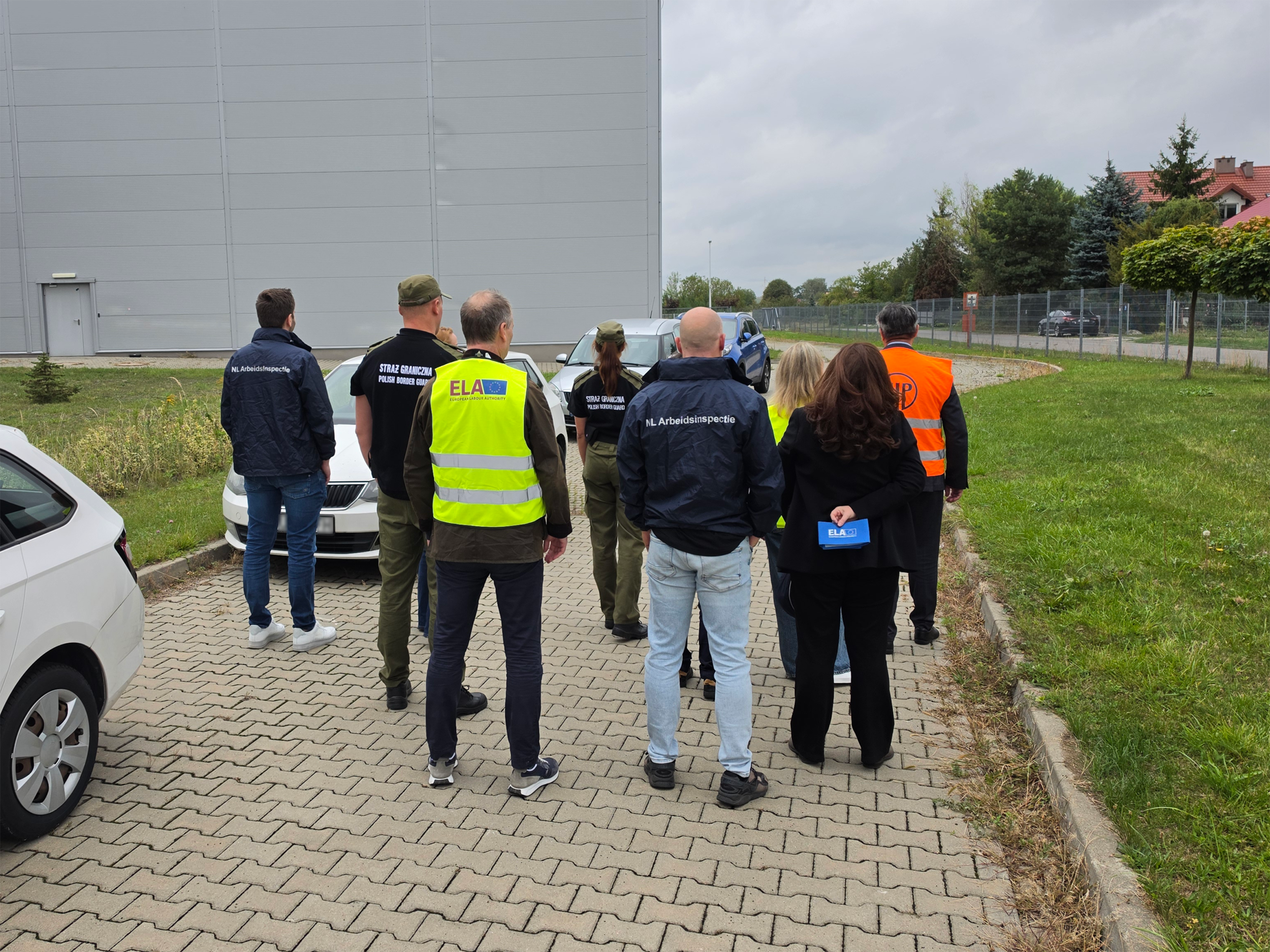
27 arrests and 248 potential victims identified in action week against labour exploitation
Published date:
Europol and the European Labour Authority (ELA) led a cross-border operation uncovering widespread exploitation in key sectors.
News
Lithuanian is available via eTranslation, the European Commission's machine translation service.
Translate to Lithuanian | Important information about machine translation
Europol, ELA and 34 participating countries, today announced the results of an action week targeting human trafficking for labour exploitation. The operation, part of an EMPACT action led by Sweden, brought together police, border guards, labour and social security inspectorates, and tax authorities to crack down on exploitative practices in high-risk sectors such as agriculture, construction, cosmetic services, massage parlours, and hospitality.
The operation took place between 14 and 20 September 2026 and focused on labour exploitation. Authorities also uncovered cases of trafficking for sexual exploitation, forced begging, and domestic servitude, highlighting the widespread nature of human trafficking across Europe.
'Only days after we presented the new EU Strategy on combatting trafficking in human beings, this operation shows why it matters. While humans should not be for sale, exploitation is happening in buildings, shops, and restaurants we pass every day. More than 16 000 officers across Europe did outstanding work to uncover it and to protect victims. We want to strengthen them further, with a reinforced Europol mandate and by going after the profits of ruthless criminals.'
'This operation demonstrates the critical role of multi-agency collaboration in dismantling trafficking networks. It is the first result of the Working Arrangement between Europol and the European Labour Authority to step up our joint fight against labour exploitation, human trafficking, and cross-border social security fraud. The scale of exploitation uncovered underscores the need for continued vigilance and coordinated action.'
'Labour exploitation thrives in sectors with weak oversight. By targeting high-risk industries and empowering labour and social security inspectorates and their work with other law enforcement organisations, we can address the most serious violations of working conditions linked to posting of workers and labour mobility and eventually support to disrupt these criminal networks. These joint inspections demonstrate the strengthened cooperation with Europol.'
Austria: Police investigated parents exploiting their children for forced begging, a case uncovered during inspections of local businesses.
Cyprus: Authorities uncovered a livestock farmworker living in squalid conditions, forced to work 10-hour days with no pay or days off. The suspect withheld the victim’s passport, provided inadequate food (flour, tea, sugar, and oil), and subjected him to degrading living conditions (leaking bedroom, outdoor bathroom, only cold water).
Hungary: In several domestic investigations during the action week, authorities identified 11 victims (all Hungarian nationals) subjected to forced labour and domestic servitude in agriculture, including underpaid work and restricted freedom. Furthermore, 4 victims of sexual exploitation were identified.
Germany: Authorities identified 63 victims (predominantly Vietnamese and Chinese) in hospitality and nail salons, uncovering cases of underpayment, illegal employment, and restricted freedom.
Montenegro: In cooperation with Azerbaijani authorities, police exposed a construction site in Podgorica where six Azerbaijani nationals were allegedly exploited by a Montenegrin and Turkish suspect for an extended period.
Netherlands: A Europol-supported investigation by the Dutch Labour Authority uncovered a human trafficking ring exploiting over 70 Indian nationals in restaurants across five EU countries. The ring forced victims to work long hours, underpaid them, and used threats to generate at least EUR 4 million in profits. Two arrests were made during coordinated raids.
Poland: Trafficking networks are increasingly recruiting Latin American victims (e.g., Colombians) online, exploiting their irregular immigration status to prevent them from reporting abuse.
Romania: Vulnerable individuals (including minors) were deceived into agricultural work with promises of fair pay, only to face over 12 hours working days, no pay, and deplorable living conditions.
Ukraine: Joint operations in Kyiv targeted internally displaced people and jobseekers, providing prevention measures to shield them from human trafficking.
Europol facilitated the exchange of information between countries and regions, promoted operational meetings, supported the deployment of investigators to assist actions in other countries, and provided analytical support.
ELA coordinated and supported 18 concerted and joint inspections. ELA provided logistical support, communication assistance, and analytical support. By supplementing national resources, ELA enabled cross-border labour and related inspections.
On 2 September 2026, Europol and the European Labour Authority (ELA) signed a Working Arrangement to enhance their collaboration in combating labour exploitation, human trafficking, fraud, and related organised crime. This agreement formalises existing cooperation, providing a structured framework for exchanging strategic information and identifying new areas of joint action.
Labour exploitation is a major but often underreported issue, frequently disguised as labour law violations, making early detection challenging. By strengthening ties between law enforcement and labour authorities, Europol aims to improve the flow of actionable intelligence, helping authorities uncover organised crime networks behind labour abuses. Recent operations such as these EMPACT Joint Action Days have shown the effectiveness of this multidisciplinary approach.
Belgium, Bosnia and Herzegovina, Bulgaria, Cyprus, Czechia, Denmark, Greece, Spain, Germany, France, Georgia, Croatia, Ireland, Iceland, Italy, Kosovo*, Latvia, Lithuania, Luxembourg, Hungary, Moldova, Montenegro, Netherlands, North Macedonia, Austria, Poland, Portugal, Romania, Slovakia, Slovenia, Finland, Sweden, Ukraine, United Kingdom.
* This designation is without prejudice to positions on status and is in line with UNSCR 1244/1999 and the ICJ Opinion on the Kosovo declaration of independence.
European Labour Authority, Europol.